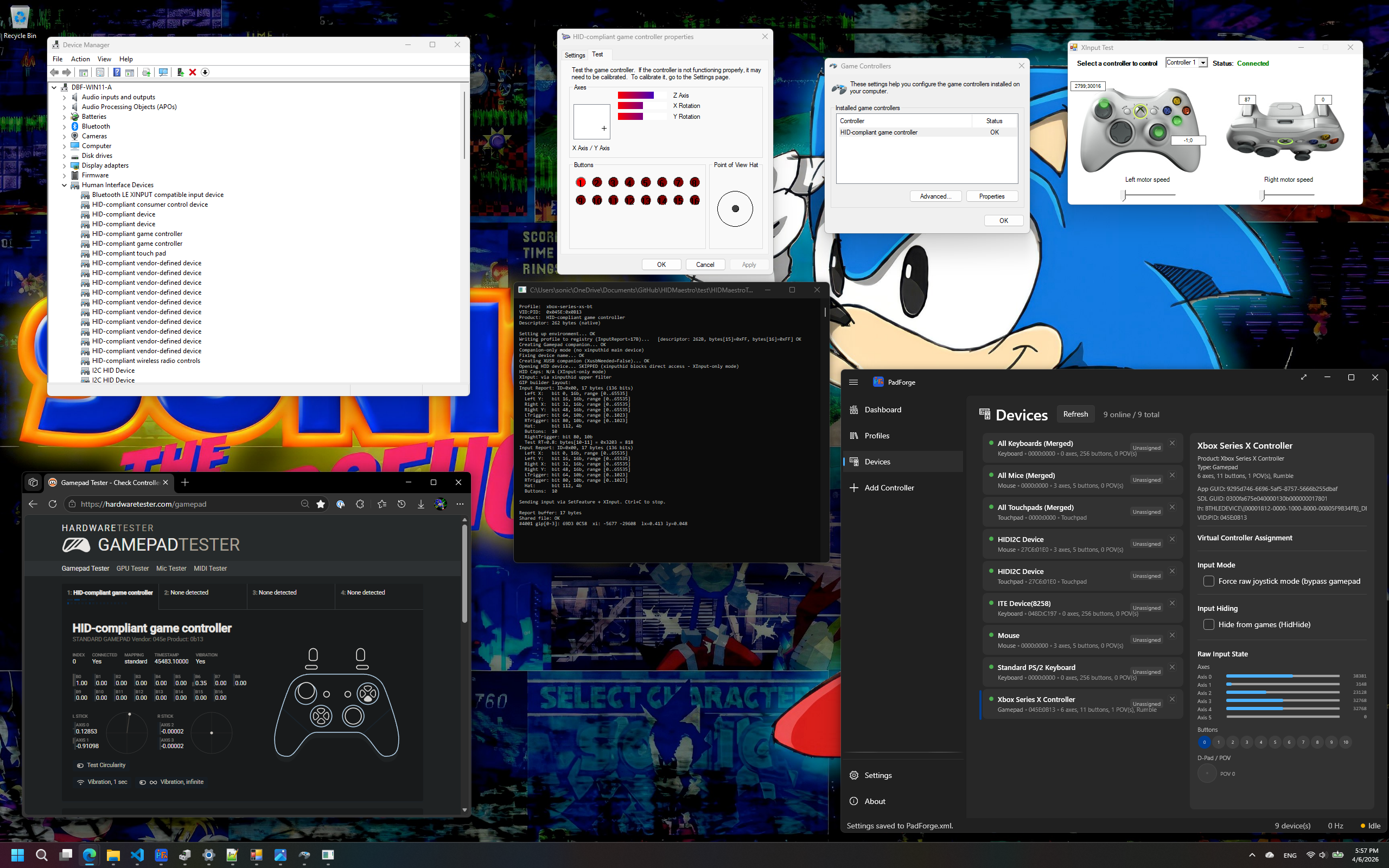
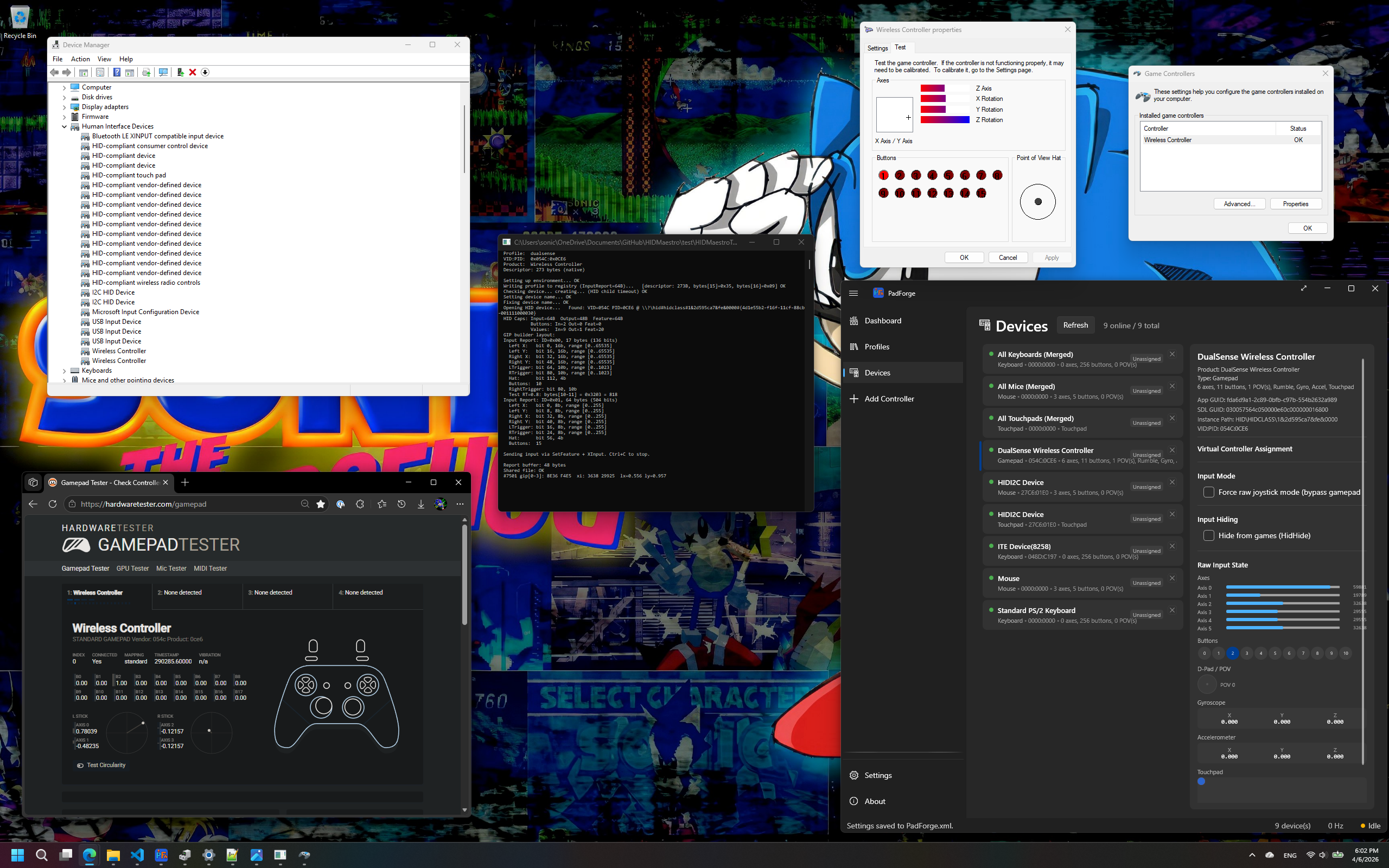
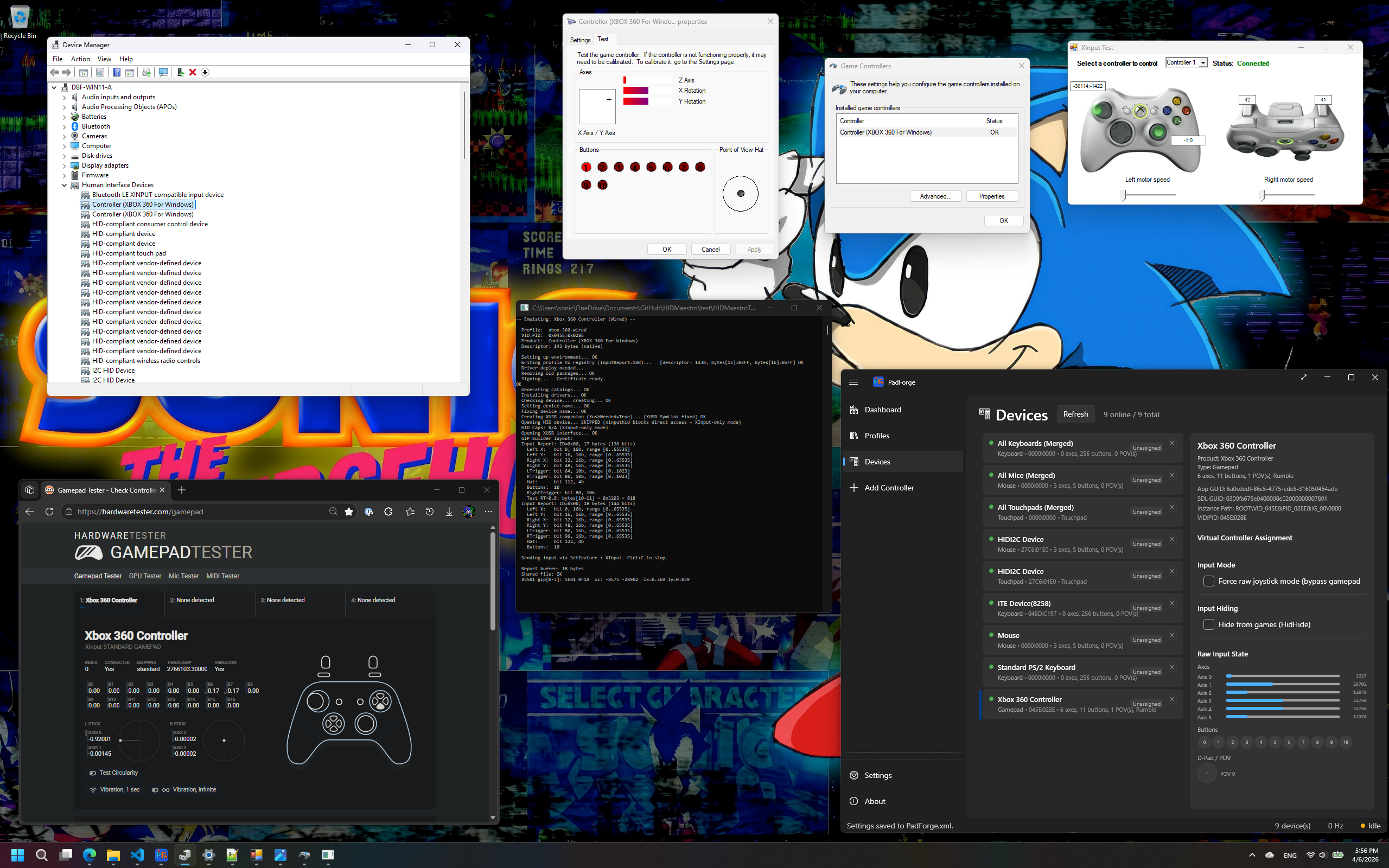
Exact hardware identityVID/PID, strings, descriptors, layout, and the bus type itself
233 device profilesXbox 360 to HOTAS, every one a JSON file
~35 µs measured latency10,000 iterations, reproducible with one command
Every gaming API at onceDirectInput, XInput, SDL3, browser, WGI, RawInput
Native on ARM64 WindowsOne DLL holds both driver sets and installs the matching one
Valve personas Steam recognizesThe Steam Deck and both Steam Controllers, filed as Valve hardware
A Switch Pro that answers backThe Nintendo handshake, answered over real Bluetooth
A Switch 2 Pro with motionGyro and accelerometer for Steam and SDL
Pressure-sensitive DualShock 3The form PCSX2 and RPCS3 read button pressure from
Controller audio and hapticsThe pad's speaker, microphone, and voice-coil endpoints
Virtual VR controllersTwo hands SteamVR promotes to real roles
Force feedback answeredHID PID for DirectInput games, rumble raised to your code
Self-bootstrapping installNo EV certificate, no test-signing mode, no reboot
Hot-plug in ~200 msCreate, live-swap, and remove, with no leftover devices
Six-plus controllers at onceCorrect per-controller order on every API
A 65-scenario batteryStock SDL and the Steam client are among the judges